


After completing a financial accounting class, many students do not look forward to another semester of debits, credits, and journal entries. Also known as management accounting or cost accounting, managerial accounting provides information to managers and other users within the company in order to make more informed decisions. The overriding roles of managers (planning, controlling, and evaluating) lead to the distinction between financial and managerial accounting.
Users of Reports
- An accounting period is usually set to be year-long and this could either be a regular calendar year or a fiscal year starting from a particular day.
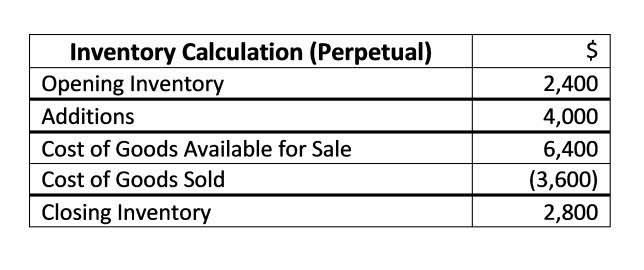
- Calculating inventory turnover can help businesses make better decisions on pricing, manufacturing, marketing, and purchasing new inventory.
- Account receivables management also helps a company avoid situations of harmfully overdue payments or total non-payment of pending receivables.
- Managerial accounting is important for drafting accurate and complete financial statements for internal use and crafting a company’s long-term strategy.
- Notice that in each of these examples, the aspect of the business that is being planned and evaluated is a qualitative (nonfinancial) factor or characteristic.
Planning includes both strategic (long-term, high-level) and operational (short-term, day-to-day) planning. Here is a closer look at a typical manufacturing company organizational chart from the plant manager on down. Each column in the chart is a department with divisions, and each of those divisions could consist of dozens, hundreds, or even thousands of employees. Want a financial analysis of future marketing costs and projected return on investment? Managerial accountants are not legally obligated to follow GAAP because the documents they produce are not regulated by GAAP.
Forecasting, Financial Planning, and Trend Analysis
The degree of complexity relative to these activities are dependent on the experience level and abilities of any one individual. The most significant recent direction in managerial accounting is throughput accounting; which recognizes the interdependencies of modern production processes. For any given product, customer or supplier, it is a tool to measure the contribution per unit of constrained resource.
Creating reports as often as needed
Nevertheless, no future forecasting is allowed in the statements issued by a financial accountant. Revaluation is an accounting technique that involves the review of the recorded book value of an asset in relation to its true market value. Revaluation accounting is only used where the fair value of an asset can be reliably measured.
Information such as return on equity, debt to equity ratio, and total return on invested capital helps a company to properly manage the exploitation and repayment of financial leverage. Optimization of cash flow ensures that a company has enough liquid assets to cover immediate expenses. Companies optimize cash flow so that they do not worry about future events and insufficient finances to complete them.
Management accountants

Resource consumption accounting (RCA) is formally defined as a dynamic, fully integrated, principle-based, and comprehensive management accounting approach that provides managers with decision support information for enterprise optimization. RCA emerged as a management accounting approach around 2000 and was subsequently developed at CAM-I,[20] the Consortium for Advanced Manufacturing–International, in a Cost Management Section RCA interest group[21] in December 2001. This is the kind of guidance that the CEO, president, and vice-presidents hand down to managers, who are then accountable for achieving the high-level goals.
- Managers spend their time in various stages of planning, controlling, and evaluating.
- Through a review of outstanding receivables, managerial accountants can indicate to appropriate department managers if certain customers are becoming credit risks.
- Managerial accounting is designed to help managers plan for the future, make decisions for the company, and determine if their plans and decisions were accurate (also called controlling).
- Take your learning and productivity to the next level with our Premium Templates.
- Cash flow analysis lets organizations make informed financial decisions and maintain sufficiently liquid assets in the short term.
Thus, managerial accounting focuses more on the future, while financial accounting focuses on reporting what has already happened. In addition, managerial accounting uses nonfinancial data, whereas financial accounting relies solely on financial data. Traditional standard costing must comply with generally which of the following is an example of managerial accounting? accepted accounting principles (GAAP US) and actually aligns itself more with answering financial accounting requirements rather than providing solutions for management accountants. Traditional approaches limit themselves by defining cost behavior only in terms of production or sales volume.
What are accounts payable?
- It includes financial and non-financial performance measures to provide a more balanced view of organizational performance.
- Business managers collect information that feeds into strategic planning, helps management set realistic goals, and encourages efficiently directing company resources.
- With inventory turnover analysis, managerial accountants can determine the cost of storing each unsold inventory.
- The distinction between traditional and innovative accounting practices is illustrated with the visual timeline (see sidebar) of managerial costing approaches presented at the Institute of Management Accountants 2011 Annual Conference.
- They then track actual production costs and compare them to these predetermined benchmarks to identify any deviations.